

STRUCTURES FOR INCLUSION 12- Design is Relational
SPEAKERS
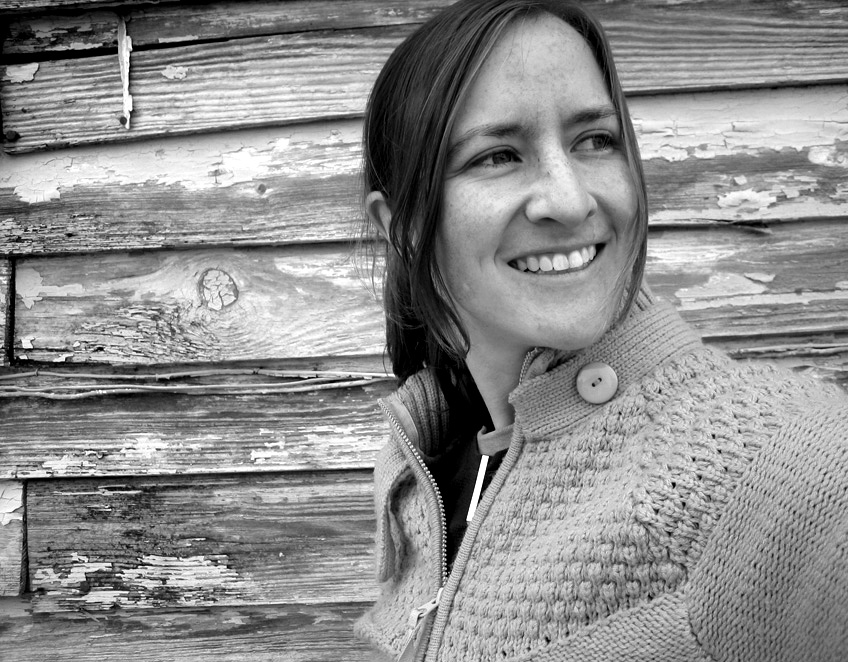 |
Emilie Taylor, as Design Build Manager at the Tulane City Center, works to coordinate the people, designs, and materials of the TCC’s built projects. Emilie’s recent community design build studio projects include the Storypod, and Project Ish at Hagar’s House. The current design build project, a 4 acre youth farm known as Grow Dat, is the City Center’s most ambitious project yet. Emilie is a part of the founding team that established the URBANbuild program at Tulane University and was the project manager for the first four houses. Emilie’s education includes a technical building background at the University of Southern Mississippi followed by a Masters Degree in Architecture at Tulane. She is actively involved in university design|build and advocates for the engagement of such programs with the local community. Emilie’s creative practice includes a documentary film on self taught builders and exploring the intersection between formal and informal architectural practice. |
 |
Michael Murphy is the Co-Founder and Executive Director of MASS Design Group, which is an design firm geared towards improving health outcomes in resource-limited settings. In addition to leading the design and construction of the Butaro District Hospital in Rwanda, which opened in January of 2011, Michael’s firm MASS has been the recipient of the 2010 Design Futures Council Emerging Leaders Scholarship, chosen as one of Fast Company Magazine’s “Master of Design” and awarded as a Metropolis Magazine 2011 “Game Changer”. MASS was recently selected as a finalist for MoMA PS1’s 2011 Young Architects Program and was honored alongside IDEO’s CEO Tim Brown for its contribution to the field of design.MASS Design Group currently has offices in Boston, Massachusetts, Kigali, Rwanda, and Port au Prince Haiti. In July MASS opened the Girubuntu Primary School in Kigali, and this fall it is breaking ground on several projects in Haiti, including the new GHESKIO Tuberculosis Facility constructed out of locally fabricated materials. |
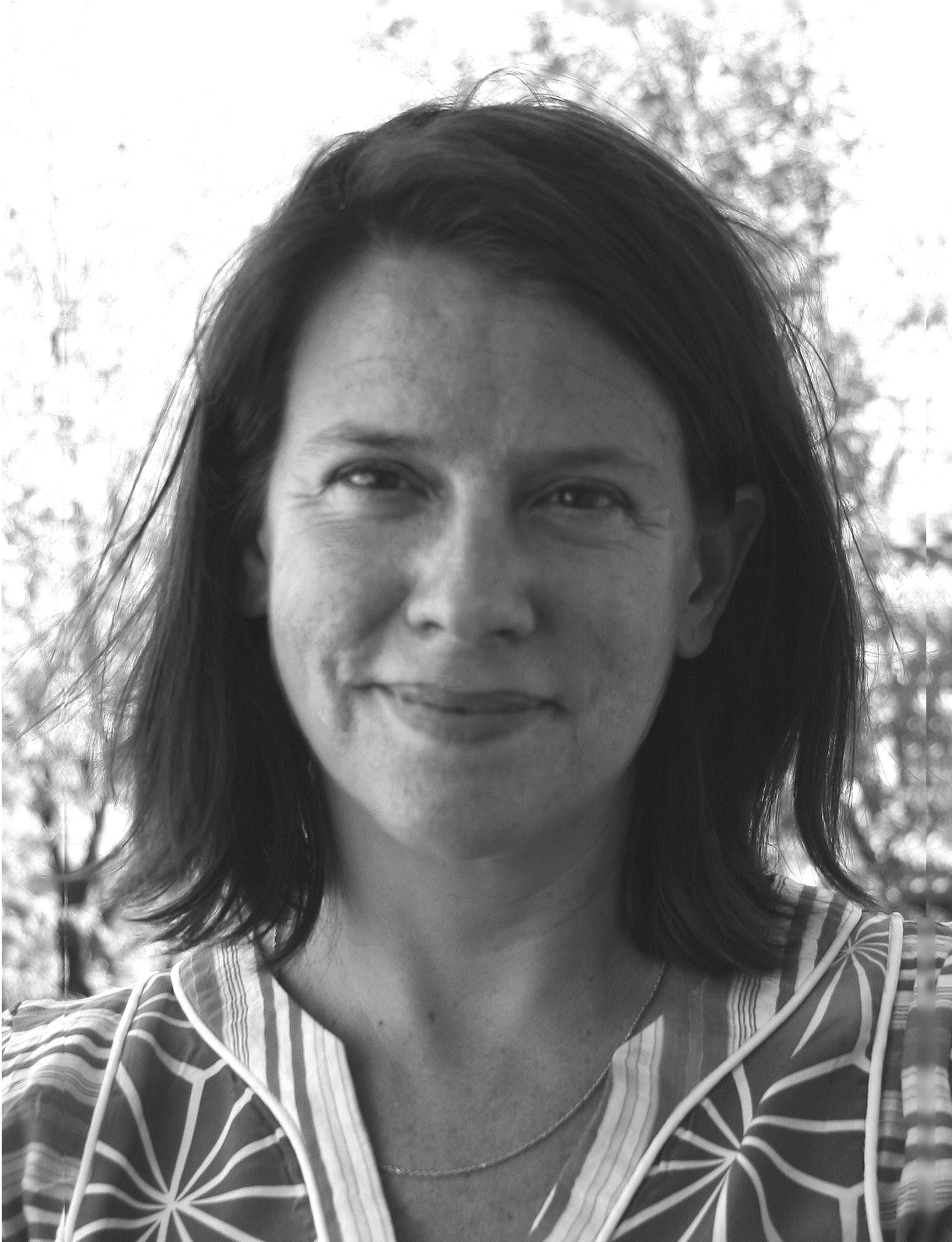 |
Jamie Blosser founded the Sustainable Native Communities Collaborative (SNCC) to research and develop best practices promoting cultural and environmental sustainability in tribal and rural communities. The SNCC, an initiative of Enterprise Community Partners, is a research and technical assistance arm to her architectural practice as an Associate at Atkin Olshin Schade Architects, where she oversees the firm’s housing, tribal and sustainable development projects. Jamie’s work is rooted in community design. As an Enterprise Rose Architectural Fellow from 2000-2003, her project received the Harvard University’s Honoring Nations award and EPA Smart Growth Award for Small Communities. The SNCC received a grant from the National Endowment for the Arts to document five tribal sustainability projects in the Southwest, including a green design guideline for the Navajo Housing Authority. Jamie is an on the Advisory Group for the AIA Residential Knowledge Community and received her Master of Architecture from the University of Pennsylvania. Her work has been selected for inclusion in Design Re-Imagined: New Architecture on Indigenous Land, a book on contemporary Native American architecture. |
 |
Tomasita Duran, Executive Director for the Ohkay Owingeh Housing Authority, is a team member of the winning SEED project Owe’neh Bupingeh Preservation and Rehabilitation Plan with Jamie Blosser and Paige Mirabal. She manages the Mutual Help Program, 184 Loan Guarantee Program, and Cha Piyeh, Inc. ( a CDFI). She oversees the Tsigo Bugeh Village Low Income Housing Tax Credit units including the rehabilitation of 200 units, the development of 45 units. She has also been a key figure in the implementation of the Owe’neh Bupingeh Rehabilitation Project in the Historical Pueblo core area as well as the development of a Master Land Use Plan for Ohkay Owingeh. She serves on the Tsay Corporation Board of Directors, NDC New Markets Advisory Group, and several Tribal Committees. |
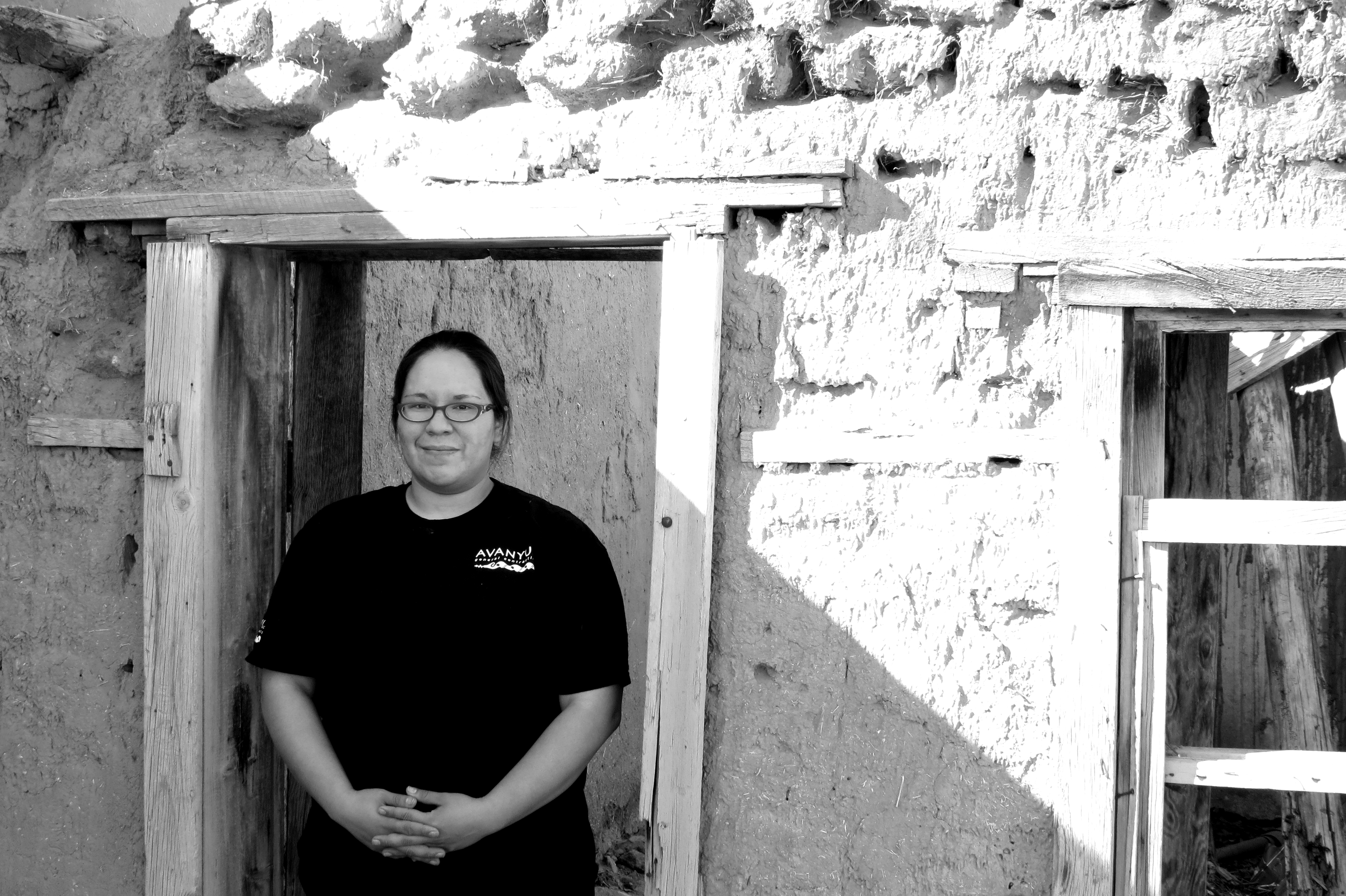 |
Paige Mirabal, Paige Mirabal is a team member of the winning SEED project Owe’neh Bupingeh Preservation and Rehabilitation Plan with Jamie Blosser and Tomasita Duran. Paige has worked for Avanyu General Contracting for over a year. This rising company has trained Mirabal to be proficient in adobe stabilization, sustainable preservation, mud plaster, and documentation. Her daily tasks at the Owe’neh Bupingeh Rehabilitation Project Phase II are to document the conditions of the houses both before and after repair, assist in adobe stabilization and preservation of the homes, and maintain quality control of the mixtures of the mud plaster. “I feel it is an accomplishment of mine to be involved in preserving homes in Ohkay Owingeh that my ancestors built”, says Mirabal. Due to her skill set and asset to Avanyu General Contracting she was selected to assist in a preservation project at the San Miguel Church in Santa Fe, New Mexico as well as a project at the Sacred Heart Church in Ruidosa, Texas. These two tremendous opportunities have given her the chance to further excel in her expertise in historic restoration. With her passion and perseverance, she remains eager to assist with more preservation projects in the near future. |
 |
Anne Frederick, as the founding director of Hester Street Collaborative (HSC), has worked to develop a community design practice that responds to the needs of HSC’s local neighborhood of the Lower East Side/Chinatown as well as the needs of under-resourced NYC communities city-wide. Her unique approach to community design integrates education and youth development programming with participatory art, architecture, and planning strategies. This approach is rooted in partnership and collaboration with various community based organizations, schools, and local residents. Prior to founding HSC, Anne worked as an architect at Leroy Street Studio Architecture and as a design educator at Parsons School of Design and the New York Foundation for Architecture. |
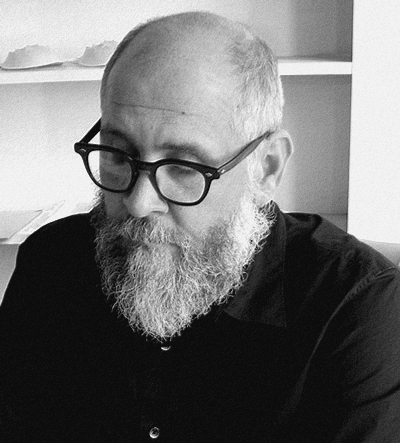 |
Coleman Coker is an architect and artist best known for the Cook House (1991), the Barton Residence (1992), the Shiloh Falls Residence (1997), Texas Twister at Rey Rosa Ranch (2003), the Patterson Clinic (2004) Bridges Center (2005) and the Alligator House (2009). Coker founded buildingstudio in 1999 after a thirteen-year partnership with Samuel Mockbee as Mockbee/Coker Architects. In 1995 their work was collected in Mockbee/Coker, Thought and Process.Coker has earned numerous honors, including a P/A Design Award for low-cost housing, Breaking the Cycle of Poverty. In 1991 he was recognized by the Architectural League of New York in their Emerging Voices Series. He has received two Record Houses Awards from Architectural Record, National AIA Honor Awards. His work has been highlighted in various exhibits including MoMA, SF MoMA, Wexner Center for the Arts, the Cooper-Hewitt National Design Museum Triennial and the National Building Museum in Washington, D.C. where he has work in their permanent collection.Coker holds a Master of Fine Arts from the Memphis College of Art and in 2008 received an honorary Doctor of Fine Arts from there. He was awarded the Rome Prize in 1996 from the American Academy in Rome and was a Loeb Fellow in Advanced Environmental Studies at Harvard University Graduate School of Design in 1994.He was director of the Memphis Center of Architecture which focused on urban design issues for advanced students of architecture through thinking with the hands: hand-thinking. He has been the Ruth Carter Stevenson Regents Chair in the Art of Architecture at the University of Texas at Austin, the visiting Favrot Chair at Tulane University School of Architecture, the E. Fay Jones Chair at the University of Arkansas and a Visiting Scholar at Montana State University. Coker has lectured extensively at universities and professional forums and has participated in numerous design juries across the country. |
 |
Gail Vittori, LEED AP, is Co-Director of the Center for Maximum Potential Building Systems, a non-profit design firm established in 1975 dedicated to sustainable planning, design and demonstration where she has worked since 1979. She was 2009 Chair of the US Green Building Council’s Board of Directors and currently serves on Board of the Green Building Certification Institute. Since 1993, Ms. Vittori has coordinated the Center’s Sustainable Design in Public Buildings Program, including serving as a Sustainable Design Consultant for the Pentagon Renovation Program’s Commissioning Team from 1999 to 2006, numerous City of Austin design projects including Texas’ first public sector LEED® certified building, the redevelopment of the 709-acre former Austin airport including piloting LEED for Neighborhood Development, the new Austin Federal Courthouse with Mack Scogin Merrill Elam Architects, and the first LEED-Platinum certified hospital in the world, Dell Children’s Medical Center of Central Texas.Since 2000, Ms. Vittori has been a catalyst for several national initiatives focused on greening the health care sector and advancing environmental health considerations in green building. She currently serves as a Co-Coordinator of the Green Guide for Health Care and is Founding Chair of the U.S. Green Building Council’s LEED for Healthcare core committee (2004-2008).Ms. Vittori was a Loeb Fellow at Harvard University’s Graduate School of Design from 1998-1999, and attended the University of Massachusetts at Amherst where she studied economics. Ms. Vittori is on the advisory boards of Natural Home magazine and Environmental Building News. She is co-author, with Robin Guenther FAIA, of Sustainable Healthcare Architecture, published by Wiley and Sons in 2008, was featured as an Innovator: Building a Greener World in TIME Magazine in March 2007 and, with Pliny Fisk III, in Texas Monthly’s 35th year anniversary issue (February 2008) in the article ‘35 People Who Will Shape Our Future’. In 2009, Secretary Janet Napolitano appointed Ms. Vittori to the Department of Homeland Security’s Sustainability and Efficiency Task Force. |
 |
Pliny Fisk is Co-Director and Co-Founder of the Center for Maximum Potential Building Systems (CMPBS), a non-profit design firm established in 1975 dedicated to sustainable planning, design and demonstration, now the oldest of its kind in the US. Pliny is considered one of the originators of the Sustainable Architecture and Planning movement in the United States, with contributions spanning four decades. Even though the Center’s non-profit work is oriented around research and education it is unique from the standpoint that it’s the prototypes Pliny has designed have been published widely with many of the foremost designers and leaders within and without the green movement. A brief list includes; Thom Mayne , Frank O. Gehry, I. M Pei, Richard Meier, Steven Hull, and product designer Jonathan Ive of Apple computer. Similarly Pliny’s work in the planning and global issues fields have been published with equally high caliber people such as Bill McDonough, Paul McCreedy, Amory Lovins, Jaimi Learner from Curitba Brazil, Paul Hawken ,Janine Benyus, Vivian Loftness, Majora Carter, Gail Vittori, Bob Berkebile, developer John Knott, and Ray Anderson of Interface Carpets in the green business sector. Due to his ground-breaking work Pliny has received numerous awards including the only Earth Summit Award in Rio in 1992 shared with the City of Austin as the first Green Building program in the world. It was the only award given to the US. He has received a Presidential award for assisting in the moving of towns from the Mississippi flood. The first ever Sacred Tree Award from the USGBS for work in the public sector, The Solar Pioneer Award from the American Solar Energy Society, and been a honorary Fellow at three universities. |
 |
Sam De Jong is a project designer with BNIM, an architecture and community planning firm specializing in deep community engagement processes and sustainable design. Over the past 30 years, practice dedicated to systems-thinking, green solutions for high performance buildings, landscapes and communities led to the firm being recognized with the 2011 AIA National Architecture Firm Award as well as numerous other acknowledgements of national leadership in advancing topics of sustainability. While at BNIM, Sam has played a key role on numerous projects, including leading the design effort and community engagement process on the mixed-used Rockhurst University Parking Garage. Sam has also accomplished work on award-winning projects in Greensburg, Kansas, that created new models for the built environment in rural American cities. At Iowa State University, he worked on a diverse team to design a sustainable village in Uganda, Africa. The project produced a new model applicable to many villages in third world regions. Sam continues work in Africa today, working with a community in remote Kenya to design and create a new campus for a secondary school and ministry center. The project is focused on developing solutions that are not only sustainable for its region, but create a new livelihood for the surrounding communities. Sam joins BNIM with the shared belief that interdisciplinary design teams create an architecture that is of high quality, innovation and lasting positive impact. |
 |
Diego Collazos is a Design Fellow for Architecture for Humanity currently working for the post-disaster school rebuilding program sponsored by Happy Hearts Fund & the SURA Group which benefits underprivileged communities in Peru, Mexico and Chile. He fully participated in the Maria Auxiliadora School project in Peru by enabling the community participation workshops, monitoring the design charrettes, undertaken field research, developing the architectural design and overseeing the construction administration. With more than 7 years of experience, Diego has been involved in diverse architectural, urban regeneration, architecture in development, research and planning projects in a variety of locations including Bolivia, Mexico, Turkey, England and Romania, making special emphasis in social infrastructure, participatory design and community empowerment. His architectural portfolio has received numerous distinctions including Bolivia’s biggest art venue the Santa Cruz Cultural Center winner of a national design competition; or the small Raramuri school located in the rural sierra Tarahumara which was honored at the 3600 La Paz architectural biennale and shortlisted among the best entries at the 2009 Open Architecture Challenge. He holds an architectural bachelor degree from Monterrey Technical Institute (ITESM) in Mexico and a building and Urban design in Development Master Degree from University College London (UCL) in London. |
 |
Gretchen Mokry trained as an architect at Parsons School of Design in New York and at the Architectural Association in London. A California licensed architect, she has spent her 20 years experience on the design and project management of educational and civic buildings. At Architecture for Humanity her role has included Program Lead for school programs in South America and Africa and Program Lead for the Football for Hope Centres. This series of twenty community centers being built throughout sub-Saharan Africa, are dedicated to programs that integrate youth development, health and education with sport. As Design Director, she will continue to bolster the AfH mission of connecting high level design talent with communities in need. |
 |
T. Luke Young is a Program Coordinator with Architecture for Humanity with more than 13 years of experience in architecture, urban planning, and social infrastructure design. He has worked primarily in Latin America, Asia and the U.S. Through his work he has integrated participatory planning, vernacular architecture and innovative design concepts to foster urban settlement initiatives that include residents, are sensitive to their culture and needs, and respect the natural and built environment. He has worked with Architecture for Humanity since 2009 when in partnership with two collaborators was awarded the Founder’s Prize in the 2009 Open Architecture Challenge and again in 2010 in Port-au-Prince, Haiti. He earned a Bachelor degree in Historic Preservation from Roger Williams University, a Master in Architectural Studies and a Master in Urban Planning, both from MIT. |
 |
Jorge “Coco” Alarcón is an independent architect with more than seven years of experience in design and building projects. He is a National Institute of Health’s Fogarty Scholar and the local design coordinator of the Ecological and Healthy School project- a partnership of the University of Washington and Universidad Nacional Mayor de San Marcos in Lima, Peru. During the last three years he has been doing design, research, and construction for a social project in the slums of the outskirts of Lima where he researches the impact of architecture and environmental conditions on human health. |
 |
Dan Shaw is completing his Master’s Degree in Landscape Architecture at the University of Washington in Seattle. His work primarily focuses on cross-disciplinary design of urban landscapes, including urban green infrastructure, brownfield reuse, and community-based design. As a recipient of the David Streatfield Endowed Scholarship for Landscape History, Dan spent the Fall of 2011 in Italy through the University of Washington’s Rome Center, studying history of urbanism and water infrastructures in Rome. He also spent much of this past summer in Lima, Peru, where he and a small interdisciplinary team helped facilitate the design and construction of an educational garden in one of Lima’s water-stressed, peripheral slums. The project received a SEED Award for Excellence in Public Interest Design. Dan’s recent design work also includes a speculative proposal for a climate change research center, based on a study tour to Japan; and currently, he is exploring the use of music in the design process of a large-scale post-industrial landscape. A native of Massachusetts, Dan earned his Bachelor’s Degree in Landscape Architecture and an ASLA Honor Award from the University of Massachusetts. |
**Other Speakers To Be Announced